

Saving an image
In the dashboard, the Add Memory input on your home page has an image button (tooltip Upload image memory). It opens the Upload Image Memory dialog:- Drag and drop an image, or click to browse.
- Optionally add your own description in the text box. This gives the AI a head start on what matters about the image.
- Click Upload. You will see an Image memory saved confirmation.
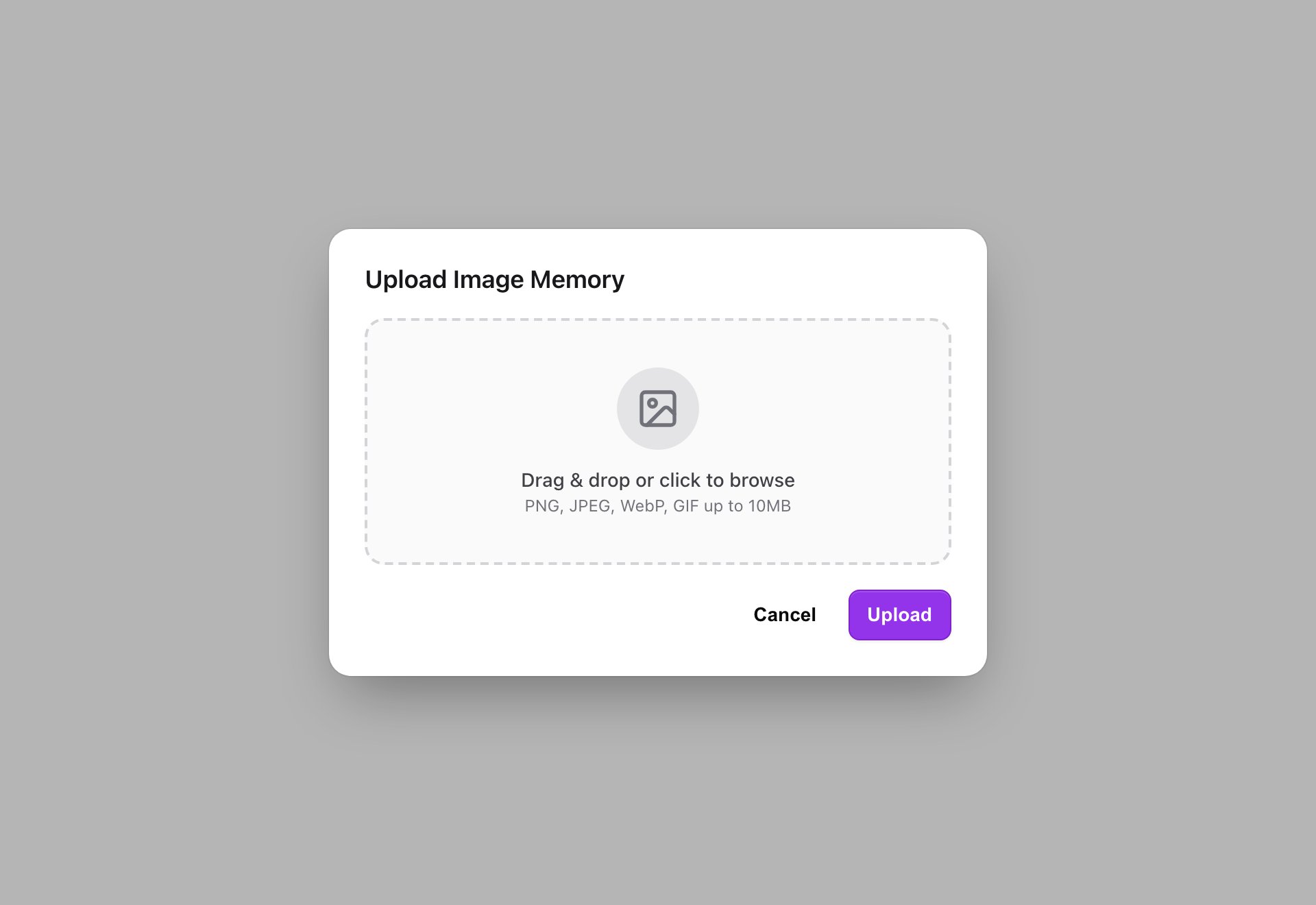
The Upload Image Memory dialog. Drop an image or click to browse.
Supported formats
- PNG, JPEG, WebP, GIF
- Up to 10 MB per image
The AI description, and why it takes a moment
Processing runs in the background. After you upload, MemoryPlugin kicks off a job that generates a description of the image and creates the vector embedding used for search. This is why you’ll briefly see an IMAGE badge with “Generating description…” on the memory card. Once the job finishes, the description is attached and the memory is fully searchable. If you typed your own description at upload time, that is stored right away. The AI-generated description fills in once processing completes.How recall serves an image
When a tool reads your memories through the API, an image memory comes back differently from a text one. Instead of plain text, it returns an object with three things:content_type: "image"so the client knows it’s an imageimage_url, a signed link to the image fileimage_description, the text description used for recall
image_url is a signed link that expires after 4 hours. That is deliberate: the link is meant to be used soon after it’s handed out, not stored and reused indefinitely. If a client needs the image again later, it recalls the memory again and gets a fresh link. The image_description does not expire, so the AI can reason about what the image shows even without loading the file.
Where image memories work, and where they don’t
- Dashboard only for now. Image upload lives in the dashboard’s Add Memory input. Save your images there.
- Not in shared buckets yet. Inside a bucket shared with you, the image button is disabled (“Image memories aren’t supported in shared buckets yet”). Text memories are fine. See Shared Buckets.
Next steps
Memory Buckets
Organize image and text memories into buckets
Import & Export
Bring memories in from a file or take them with you